






Rachel Gillig on Her Gothic Fantasy “The Knave and The Moon”
Bestselling author Rachel Gillig opens up about her gothic fantasy book “The Knave and The Moon” and her defining moments to date.
- Words
- Syameen Salehaldin
- Published
- Lifestyle · 4 September 2026
It’s a gothic divine
Rachel Gillig’s formative years were shrouded in literature, and there was always a distinct before and after when it comes to her success. Her early years were spent writing Jane Austen fan fictions and losing herself in C.S. Lewis, J.R.R. Tolkien, and George R.R. Martin–influences that would later seep into her own world-building. From wondrous worlds to morally tangled alliances and charged, adversarial romances, Rachel Gillig is poised to reach new heights with her fantasy novels.
Among the hundreds of fantasy books in the world—tales of mythical beasts, intricate magic systems and philosophies—Rachel Gillig has always written a slightly different rendition. Hers are steeped in something darker and gothic. “Fantasy to me is malleable,” she said. “I love a world where I could create everything the way I wanted.” On the cusp of a new chapter, Rachel Gillig spoke with us about her newest release, The Knave and the Moon, and the moments that defined her journey.
“I studied English and there were two tracks–creative writing and literary analysis,” she said. “I purposely steered away from creative writing because I didn’t want anyone to read what I wrote, which is so funny now.” Still, it never stopped her from writing—not even during her years as a preschool teacher. Everything shifted in her late twenties, when an idea took hold: a retelling of Alfred Noyes’ short poem The Highwayman. That idea became One Dark Window. She then began querying literary agents soon after, and by 2020, she had a book deal. “I was like a child where you don’t create for other people to weigh in on, you kind of just create. It certainly felt wonderful and messy.”
She then explained that the book was a quiet debut. “It wasn’t like a blockbuster smash out of the gate, because I was a nobody. I had no social media presence. I was kind of just existing,” she explained. But her path changed course when the book landed a spot as Barnes & Noble’s Monthly Pick and found its way into a book subscription box. She’s quick to credit the rest to timing and community—BookTok, Bookstagram, and a world of readers suddenly stuck indoors during Covid, with nothing but time to fall into a story.
;
For her, every book begins the same way, “in its purest form as an idea”. Only once it hits paper does it become, in her words, “muddled” and “messy”. Weaving folklore, fairy tales, art, music, poems and other literature forms, her writing bears themes and matters that exerts a totemic pull for all sorts of readers. After making a striking impression with her debut novel, One Dark Window she released the sequel Two Twisted Crowns. She has at this point, released 4 books, with The Knave and The Moon being her recent sensational release, a sequel to The Knight and The Moth in The Stonewater Kingdom duology.
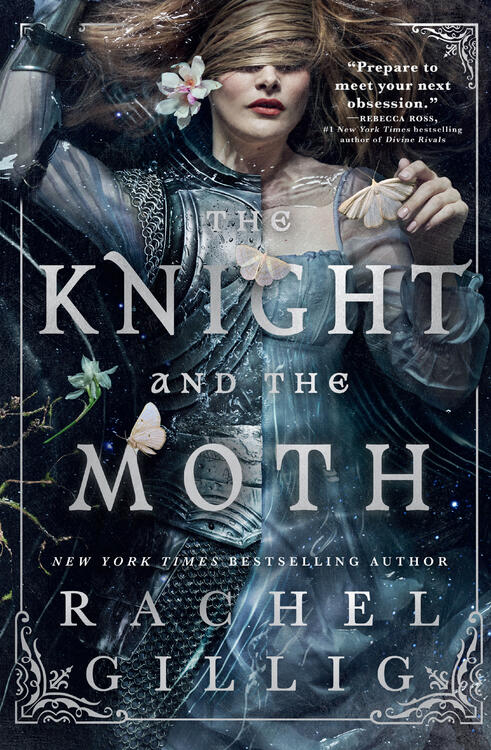
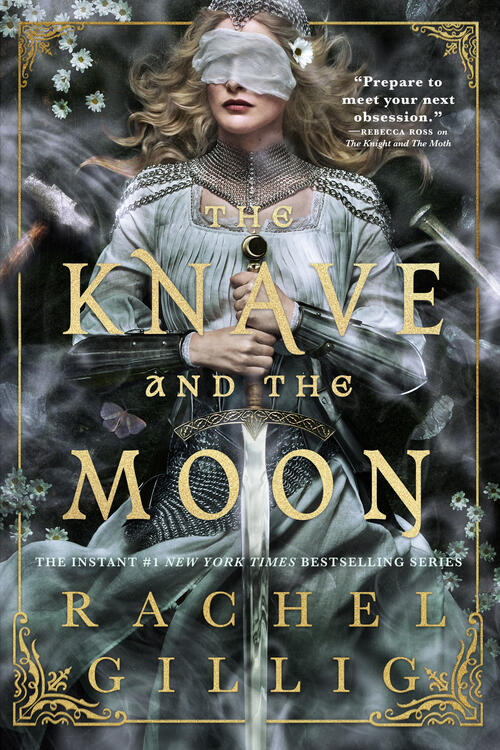
Swiftly evolving into a revenge-fueled, visceral tale, The Knave and The Moon picks up right after Sybil Delling is forced into marriage with the king, allowing him to solidify his power over Traum while the Aisling Cathedral lies in ruins. With her allies rumoured dead and herself held captive and drugged, Sybil is far from broken—she quietly plots the king’s downfall, even if it costs her everything. As Benji stages tournaments to flaunt their union, a mysterious knave rises through the ranks, possibly her only path to freedom. In a kingdom where cruelty wears a crown, Sybil must decide how far she’s willing to go to destroy it. Sometimes, saving your faith means burning it down first.
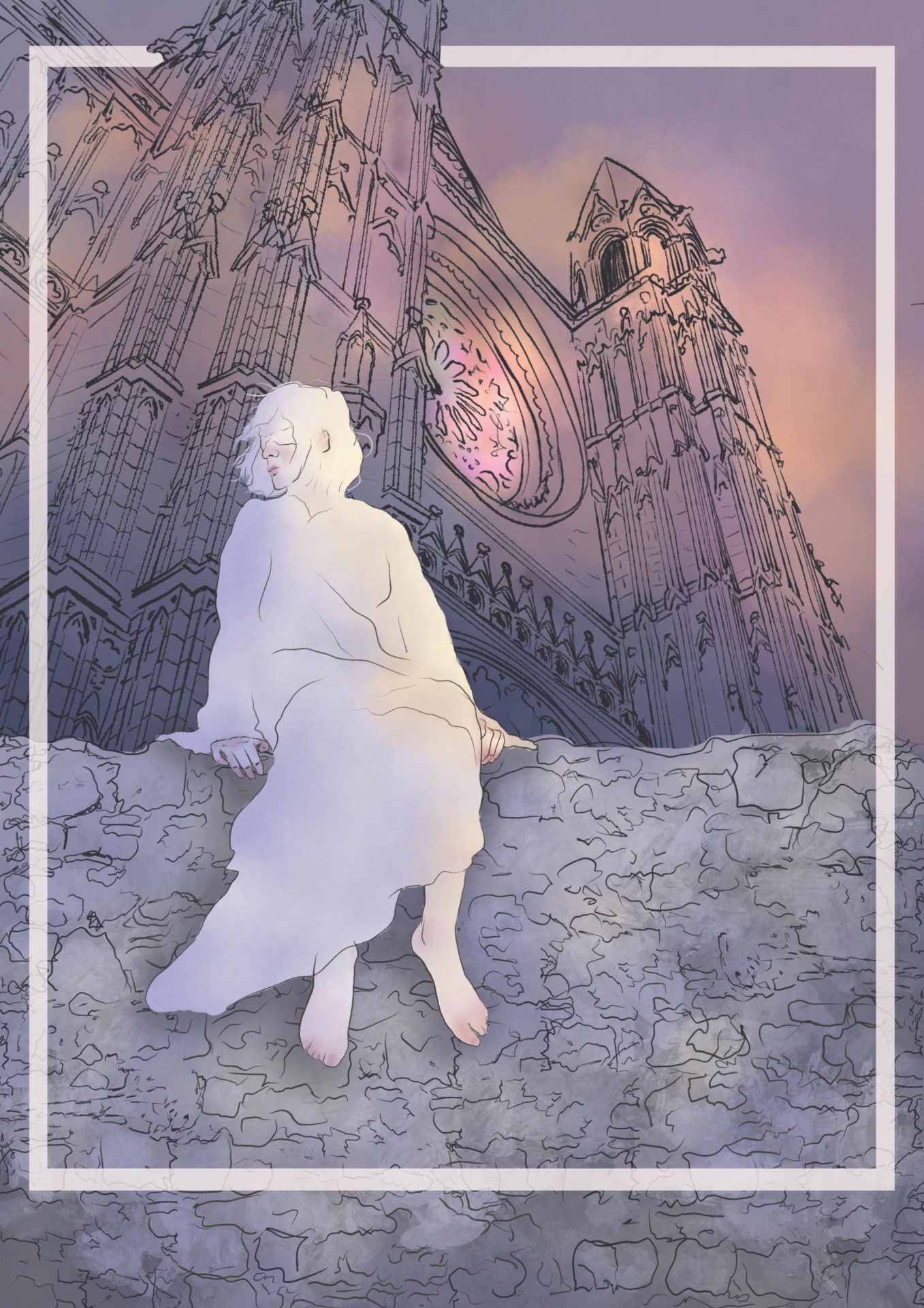
Drawing from the traditional folk ballad The Outlandish Knight, The Stonewater Kingdom duology carries a visceral, gothic atmosphere—knights, diviners, and kingdoms steeped in darkness. “There’s been many iterations over the years, but essentially the story revolves around these women who are lured away by this outlandish knight who ends up drowning them,” Gillig explained. It was this concept that captivated her—the slow, mounting suspense of women captured one after another—and from that fascination, the duology took shape. “I’m also a visual person, so one of the first visuals I imagined was an old cathedral upon a hill,” she said. “So, that’s where it all began.”
In conversation with Rachel Gillig:
How did you first conjure up Sybil’s character and find her voice? How did you approach writing a character whose voice had to hold both devotion and rebellion at once?
In the first book, Sybil starts at an indoctrinated place. She’s a bit of a zealot because her world is very small. The whole idea of being a diviner who doesn’t have names, can’t see their faces and wear all the same clothes, exudes that they are symbols and not people. She feels special about that, but she is completely lacking individuality and identity. So, through the quest of her eventually leaving the cathedral, exploring the world beyond and kind of seeing how this religious system she had upheld was destructive, it’s a great fodder for a quest story.
So we start with Sybil with a very narrow view of the stonewater kingdom, and as she goes out of her comfort zone, she has to rewire her thinking. When one goes from a place of being a zealot to questioning, it’s hard. She kind of rails against it. But, at the end, we end up in a place where she finally realises she’s not looking externally towards a religious system for strength, for purpose, for meaning, for individuality. She finds it in her own literal physical strength, but also just her friendships.
Now, in The Knave and The Moon, she’s working to dismantle that very religious system. How did her character shift from book one to book two?
In book two, she’s a symbol of diviners again, but she’s also a queen, which is a symbol of power. She’s not supposed to be seen as just a regular person. She’s like a holy chattel. I will say I approached it in a different way. She’s not going from naive to worldly. She’s going from kind of embittered to having hope again. So it’s more of an internal journey as well.
Were there any inspiration for the characters in the book?
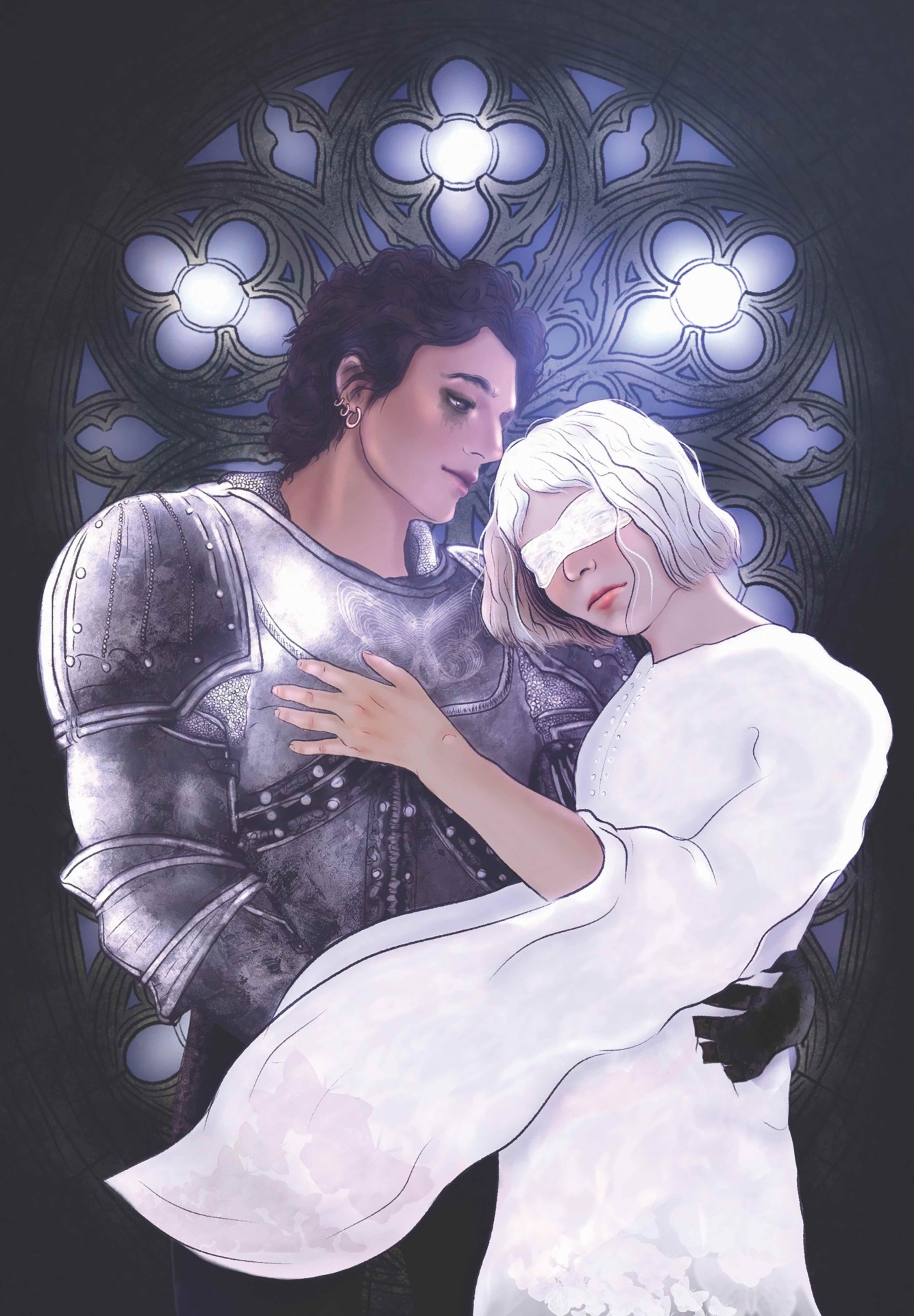
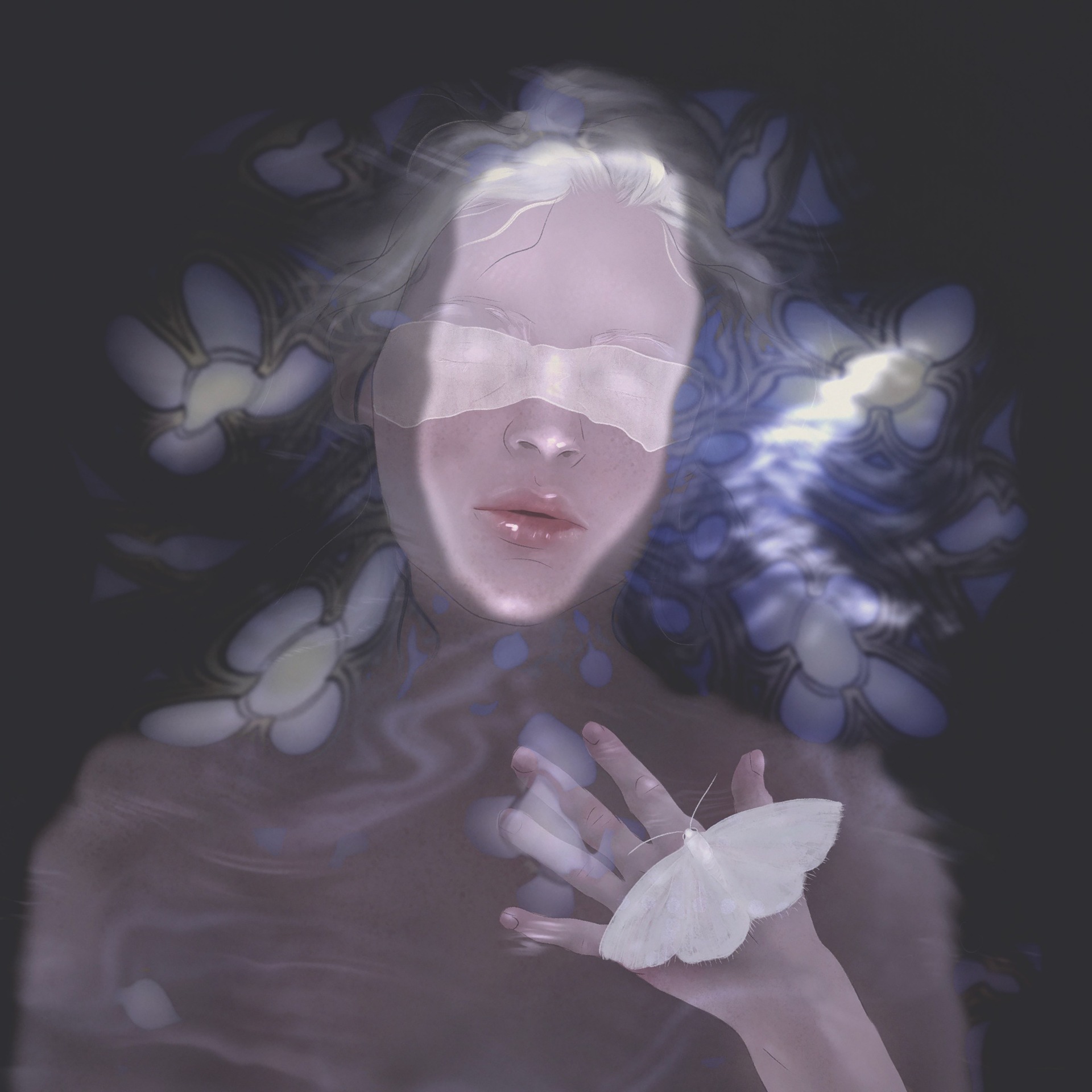
When it comes to creating characters, it always starts with an external, then a visual component, and it slowly evolves into its own character. I’m a huge fan of Game of Thrones. I loved Brienne of Tarth, so Maud embodied that strong bodied woman. But, I also loved the singer, Aurora. She’s very ethereal, mystical and she has this short, beautiful silver hair, which I drew inspiration from for Sybil.
Looking back at The Knight and the Moth, do any scenes or quotes from that first book still stick with you?
It has to be “To tell a story is in some parts to tell a lie, isn’t it”. It very much encapsulates not only the theme of a religious ideology being pushed out–it actually has a much darker underbelly–but you could apply that even to stories themselves. You don’t figure out the truth by someone just telling you something, you kind of have to experience it yourself.
How about for The Knave and The Moon?
It’s another Bartholomew quote. I really like the final chapter when he’s kind of retelling the story of everything that’s happened. I like the final line where he says “Every day is a new flower, a second chance–a rebirth–when you are Bartholomew”.
Who was your favourite character to write, and why?
100 per cent it’s Bartholomew. He’s a side character, so he didn’t have to carry the weight of the quest in the book. Because of that, he had so much freedom. From the get go, I knew I wanted him to be far more sillier than the other characters. He’s very childlike–saying things backwards, getting idioms wrong and just taking things too literally or not literally at all. I thought it was funny, the absurdism of it all. He was just so fun to write.
Your books are so visually rich, and clothing plays such a vivid role. How much thought do you put into what your characters actually wear?
I tried to make the Diviners feel otherworldly, kind of ethereal with the shroud and gossamer. Putting them in a very light white hue for the symbol of purity was important. The fabric was important too. I liked how it was well juxtaposed against the knights who are wearing heavy armour. So, when Sybil eventually removes the shroud to start putting on armour, these visuals and clothing show the symbolism of the story. And I like to make little connections like that. I just think it’s good world building to think about what characters are wearing. It’s just more immersive.
What was your favourite Rory and Sybil moment in The Knave and The Moon?
It’s when he enters the arena and she starts recognising him. Her and Benji are freaking out while Rory’s just kind of wiping the floor with everybody. She doesn’t think it’s him and she’s having a full-blown, “what’s going on?” moment.
I also love when she asks him to take off his helmet and she sees his earrings, little eyeliner and she knows it’s him.
What did you listen to the most while writing The Knave and The Moon?
I listened to a lot of film soundtracks like Game of Thrones. There wa alsoPreacher’s Daughter by Ethel Caine, Sleep Token and Hozier–kind of moody, evocative music.
Now that The Stonewater Kingdom duology is complete, what’s next for you?
I have another project in my pocket and it is a completely new world. It is far more whimsical and romantic. I would call it cosy fantasy. There’s certainly still a magic system, but it’s a rom-com. I’m doing a little bit of a tonal shift. I’m ready to not only drag myself, but drag my readers through the ringer with more painful duologies. So I’m trying my hand at a little something different going forward, but it’s still going to feel like a Rachel Gillig book.
Do you have any beauty or getting-ready rituals that help you get into a writing headspace?
I write so much at home, so no one’s going to see me. But, I still want to feel good. I do my best work in the morning, so I’ll try to eat something first. I’ll have coffee and then brush my teeth, comb my hair, put moisturiser on, put chapstick on, and then get to work. I’ll also try to get good sleep.
What are you reading right now?
I’m reading two things at once, A Psalm for the Wild-Built by Becky Chambers and Lord Edgware Dies by Agatha Christie–I find her writing style a good brain itch. I’m also reading an early copy of Rebecca Ross’s new book.
What’s your go-to press tour outfit?
I like to travel light. However, I also like looking good. I would say my tastes are fairly simplistic–I wear a lot of black. But, I do love tailored and oversized blazers too. I’m recently a convert to The Row, so that’s been a favourite . Jeans are comfortable and a great go-to. I like to be comfortable. For this book tour, I am packing a little bit of chain mail to style my outfits and match the cover of The Knave and The Moon.
Discover more about Rachel Gillig and her books here.